
Duty to act honestly, in good faith and for a proper purpose
On this page

To act honestly, in good faith and for a proper purpose (section 26 of the Public Governance, Performance and Accountability Act 2013 (PGPA Act)) means that an official must act in a sincere or honest way for a purpose that they are employed to do and empowered to undertake. In doing so, an official is required to manage or use public resources in an efficient, effective, economical and ethical (proper) manner.
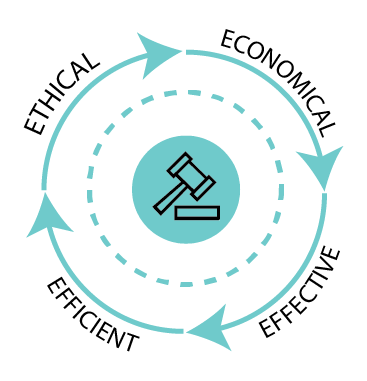
In practice, an official could think of their duty to act in good faith and for a proper purpose, by considering whether an informed person would deem an action to be appropriate. This means that the official is performing an action consistent with the purposes of the entity in an efficient, effective, economical and ethical way.
Examples of not acting in good faith and for a proper purpose could be:
- providing information to a person in a way that intentionally deceives or misleads them
- undertaking an activity that is outside the powers and functions of the entity
- purporting to have authority to approve something when you knowingly do not
- withholding relevant information with the intent to influence the decision of a delegate or statutory office holder.
Case study
Link copiedSally is a newly appointed IT asset manager in a Commonwealth entity. She has been approached by Lucy, one of her staff, to borrow a laptop projector to use for her daughter's slumber party over the weekend. Lucy tells Sally that the last IT asset manager regularly allowed staff to take the laptop projector home. She is also one of Sally's best employees and a very trustworthy person and has undertaken to cover repair costs if the projector is damaged.
Appropriate action: Sally reviews the entity's guidelines on the use of entity assets, but it does not detail a policy on the personal use of assets by staff. However, the guidelines do require the proper use and management of all entity assets. On balance, Sally declines Lucy's request, considering it to not be within the spirit of the proper use and management of the entity's asset, despite there being a precedent. Sally also takes time to explain to Lucy reasons for refusing her request.
- For APS employees, the APS Code of Conduct requires the employee to:
- 'behave honestly and with integrity in connection with APS employment' (section 13(1) of the Public Service Act 1999 (PS Act)) and
- 'use Commonwealth resources in a proper manner and for a proper purpose' (section 13(8) of the PS Act ).
Explore your other duties
Policies, legislation and guidelines
Link copiedRelevant sections of the PGPA Act and Rule
Link copied- Section 26